
Quick answer: Before buying a used plant trailer, confirm its plated maximum authorised mass (MAM), suitable payload, towing compatibility, chassis condition, brakes, tyres, coupling, breakaway system and ramp condition. A trailer that looks sturdy may still be unsuitable for your excavator or towing vehicle if its weights or safety systems do not match the intended load.
Plant trailers carry concentrated, heavy loads and may spend their lives on muddy sites and uneven access roads. Checking them carefully can help prevent unsafe loading, expensive repairs and unnecessary journeys.
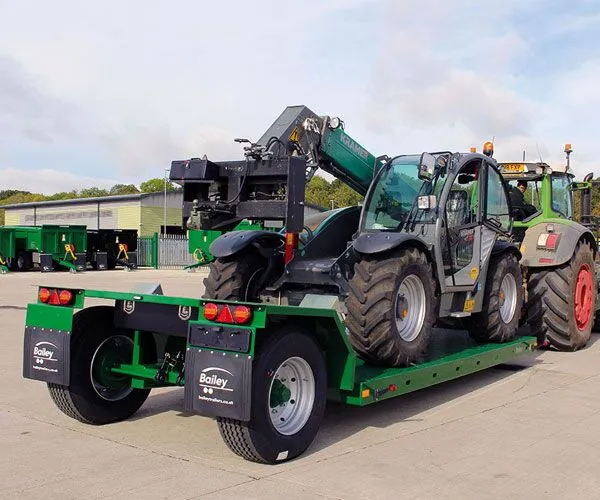
How do you know if a plant trailer can carry your machine?
Start with the plate. Check the trailer's MAM and its unladen weight to establish an approximate legal payload, then confirm any limits and modifications with the manufacturer where necessary. Include the weight of attachments, fuel and additional equipment in the load calculation. Do not compare a digger's brochure weight with a trailer rating and assume the combination is safe.
Also verify the towing vehicle's permitted trailer weight, gross train weight, coupling limits and suitable driving-licence entitlement. Legal towing limits depend on the complete combination and use. The trailer's rated capacity is not permission to exceed the towing vehicle's limits.
Which structural areas should you inspect?
Examine the drawbar, welded joints, crossmembers, bed, ramp hinges, ramp supports and mounting points. Look for cracks, distortion, significant corrosion, bent sections and signs of crude repairs. Check the condition of any timber deck and tie-down points. Ask whether previous damage or welding work has been professionally assessed.
Check the loading ramp width and angle against your machine. Ensure ramps lock securely for travel and that any spring assistance works safely. Never walk beneath an unsupported ramp or attempt a loading demonstration on unsuitable ground.
How do you check brakes, tyres and the coupling?
For a braked trailer, inspect the condition and operation of the handbrake, overrun mechanism where fitted, brake linkages, cables and breakaway cable. Check the coupling head, jockey wheel, bearings and wheel fixings. Tyres need appropriate load ratings and should be examined for cuts, cracking, uneven wear and age-related deterioration.
Lights, reflectors, wiring and number-plate provision also matter. If safety-critical components are uncertain, ask a competent trailer workshop for an inspection before using it. GOV.UK states that trailers above 750kg loaded weight must have a working braking system and that the required breakaway or secondary coupling arrangements must be used.
What documents and extra costs should you ask about?
Request the maker's identification details, available original specification, purchase paperwork and service or repair receipts. Ask whether ramps, spare wheel, winch or tie-down equipment are included. Confirm whether the seller can show the trailer's lights and braking system working; do not treat an expired or incomplete record as evidence of current roadworthiness.
Budget for replacement tyres, brakes, bearings, lights and any professional repairs. If towing it away safely is in doubt, arrange suitable transport rather than taking a chance on the road.
Frequently asked questions
Does a 3,500kg trailer carry a 3,500kg excavator?
No. The trailer's rated maximum includes its own weight. Calculate the remaining permissible payload and verify all other vehicle and towing limits.
Is a new-looking trailer tyre always safe?
No. Check load rating, tyre age and sidewall condition as well as visible tread.
Can I tow an unbraked plant trailer?
Only if the applicable weight and legal requirements permit it. Plant trailers are often braked; confirm the exact specification and current rules before towing.
Next step: Browse plant trailers on The Commercial Trader and request the trailer plate and detailed condition photographs before viewing.