
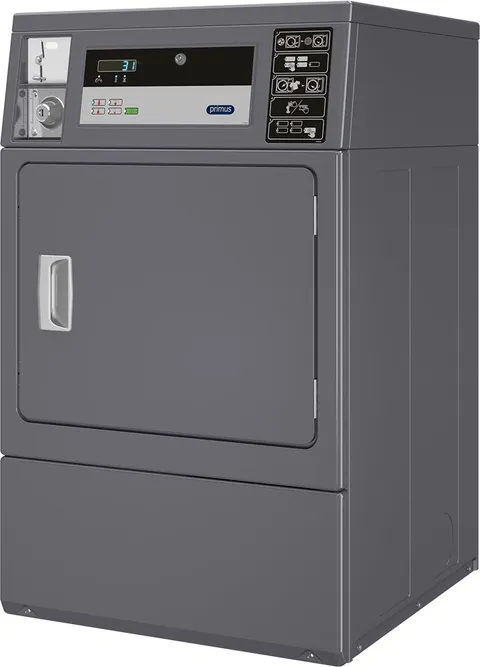
Image source: The Commercial Trader
Prepare a commercial tumble dryer for sale by identifying its exact model, capacity, heating system and utility requirements, then documenting its condition and service history. Establish whether buyers can see it operating and agree how disconnection, removal and collection will work. These details help a buyer judge both the machine and the cost of putting it into service elsewhere.
A clean exterior is useful, but the strongest advert answers the questions that can stop a sale: will it fit, can the premises supply it, and what evidence supports its description?
Identify the exact machine and heating version
Photograph the identification plate and record the manufacturer, full model, serial number and rated dry load capacity. State whether it uses electric, gas, steam or heat pump heating, together with the specified voltage, phase and electrical load. Identify gas type where relevant and distinguish confirmed specifications from information you still need to obtain.
Find the matching installation and operating manuals. For example, Electrolux’s TD6 14 installation manual sets out different connection and ventilation arrangements for its heating variants. A range name alone is insufficient. Give the actual machine’s dimensions, weight and access requirements, including clearance to open the door and service it.
Build evidence of use and condition
Describe the setting in which the dryer worked, the types of laundry handled and whether it remains in daily use. Provide any available cycle or operating counters, dated service reports and invoices for replaced components. State when it last completed a working cycle and explain periods in storage.
Arrange an appropriate service assessment where condition is uncertain. Record known faults, recurring error messages and outstanding repairs. Clean the drum, accessible filter areas and exterior following the manufacturer’s instructions. Photograph the drum, door seal, controls, lint filter and visible connections, as well as cosmetic damage. Specific evidence is more useful to a buyer than an unexplained claim that a machine is fully refurbished.
Set out installation and removal responsibilities
Share the specified power, ventilation, exhaust and drainage requirements where applicable. Buyers comparing commercial laundry equipment need to assess these against their premises. Explain what ducting, payment controls, bases or other accessories are included, and what belongs to the building and will remain behind.
Agree who arranges and pays for safe disconnection. For gas equipment, appoint an engineer qualified for the appliance and premises; HSE’s gas safety guidance for employers explains the relevant competence and registration requirements. Arrange electrical work through a competent electrician. Measure the removal route and disclose stairs, narrow doors, loading restrictions and any need for specialist handling before collection is booked.
Create a listing that supports a useful enquiry
Lead with the model, capacity, heating version, condition and location. Add clear photographs and a concise account of maintenance, included equipment and any defects. State the asking price, VAT basis, collection timetable and whether delivery is available. Keep charges for disconnection, handling and transport explicit.
If a demonstration is possible, explain what buyers can see and who will operate the dryer. A dated video can help, especially for distant enquiries, but describe the test conditions. Record the laundry type and load when discussing drying times. If the machine is already disconnected, state that fact and provide the best available service and operating evidence.
Frequently asked questions
Can I advertise a dryer that is already disconnected
Yes. Explain when and why it was disconnected, its last known operating condition, and what records are available. Do not describe an untested machine as demonstrated working. For equipment supplied for use at work, accurate disclosure does not remove the seller’s safety duties; follow HSE’s guidance on second-hand equipment. Agree how inspection will be handled before a buyer travels.
Should I quote a drying time for every load
Avoid promising one result for all laundry. Give the conditions behind any recorded test, including fabric, load and programme. Supply the manufacturer’s information so a buyer can assess likely throughput for their own washing and drying process.
Who should pay for removal
Agree this explicitly before accepting an offer. Identify who books the engineer and transport, provides suitable handling equipment and manages access. A collection-only price should still explain what the buyer must arrange and when the machine will be ready.
Check comparable commercial tumble dryers, then prepare a listing that makes your machine’s specifications and collection arrangements clear. Buyers can contact sellers directly, so keep the manual, service records, and answers to installation questions ready.