
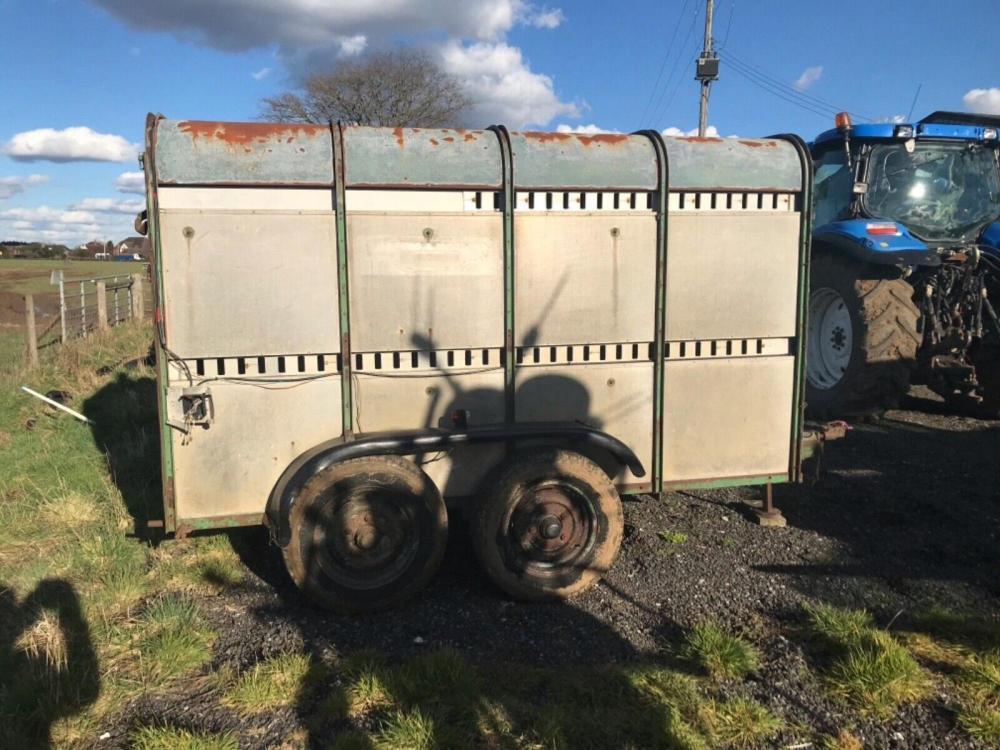
Image source: The Commercial Trader
Choose a used livestock trailer by checking the animals it must carry, the usable space and weight it can accommodate, and the vehicle that will tow it. Inspect the floor, ramp, partitions and ventilation together, then confirm that its condition and documentation suit your intended journeys. A headline length or advertised animal count cannot settle those questions.
Write down your typical movements before browsing: species, approximate liveweights, group sizes, journey lengths and loading facilities. Include seasonal changes, such as larger finished animals or the need to separate groups.
Compare usable space and available payload
Ask for internal measurements, headroom and the layout with partitions and any decks fitted. Check how gates, wheel boxes and other fittings affect usable space. Discuss suitability for the particular animals with someone competent in livestock transport; there is no single head count that makes every load appropriate.
Request the manufacturer’s plate details and reliable information about the trailer’s current empty weight. Added decks, partitions or other equipment change what remains available for animals and supplies. Account for bedding and anything else carried. Where the figures are uncertain, arrange a weighing and have the proposed load assessed before committing to a trailer.
Inspect the floor and loading arrangement
Examine the floor surface, edges and supporting structure for damage, corrosion, soft areas or previous repairs. Arrange safe access for a proper inspection of concealed areas. Ask what work has been done, who carried it out and whether supporting invoices or photographs are available.
Check ramp hinges, assistance mechanisms, grip surfaces, gates and catches. Partitions should suit the intended groups and secure properly. Inspect ventilation openings and any fitted equipment, then assess whether the trailer can be cleaned thoroughly. Consider how it will connect with your existing livestock handling equipment at collection and unloading points.
Check the complete towing combination
Match the trailer to the actual towing vehicle, hitch and braking connections. Check manufacturer limits, axle loads and the permitted combination weight with the vehicle carrying its normal occupants, fuel and equipment. GOV.UK’s towing weight guidance explains the distinction between a vehicle’s towing limit and the gross train weight of the loaded combination.
Have the trailer’s brakes, coupling, suspension, bearings, tyres and lights assessed alongside the livestock body. Ask for maintenance records and the correct handbook. If you intend to tow with a tractor, check that specific combination and its braking arrangements separately; a livestock body does not establish compatibility with every towing vehicle.
Plan the journeys before agreeing the purchase
Consider the routes, weather exposure, waiting time and facilities at each destination. Check which transporter, competence, vehicle approval and journey documents your operation needs. GOV.UK’s animal transport guidance explains the requirements for England and Wales and links to guidance for Scotland and Northern Ireland. Verify the rules for your location and work.
Where approval documents are relevant, confirm that they match the trailer and its present configuration. Ask about modifications, cleaning records and previous use. Measure narrow entrances and consider where you can park and open the ramp at both ends of a regular journey. A trailer that fits the road may still be awkward in a collecting yard. For larger regular loads, include livestock trucks in your comparison so the transport format fits the job from the outset.
Frequently asked questions
Can I rely on the advertised number of animals
Treat it as a starting point for questions. Suitability depends on the species, animal size, usable floor area, headroom, grouping and journey, alongside available payload. Ask how the seller calculated the number and assess your own load separately.
Is a replacement floor a good sign
It can be useful maintenance, but request evidence of the material, supporting structure and installation. A new surface can conceal unresolved damage underneath. Have the complete floor assembly assessed rather than judging it from its appearance alone.
What should I send the seller before a viewing
Describe the animals, expected load, towing vehicle and journey pattern. Request plate photographs, internal measurements, floor and ramp images, maintenance records and details of included partitions. These answers help establish whether a visit is worthwhile.
Save suitable livestock trailer listings to your favourites, then ask each seller the same practical questions. Compare the cost of a trailer ready for your journeys, including repairs, missing fittings and collection. If you have a livestock trailer to sell, create a trailer listing.