
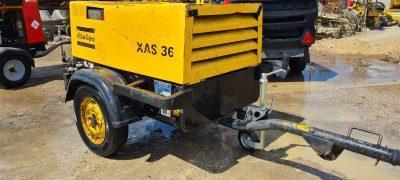
Image source: The Commercial Trader
Match a used air compressor to the airflow your tools need at their working pressure, then check how long that demand lasts. Motor power, receiver size and the number of outlets are useful details, but none establishes suitability on its own. The right purchase supports the work without repeated stops while pressure recovers.
Compare delivered air at the required pressure
List each tool’s required pressure and air consumption from its manufacturer’s specification. Ask whether any quoted consumption is continuous or averaged over intermittent use. Record units consistently so you can compare the figures with the compressor’s free air delivery, usually abbreviated to FAD.
Request FAD at the pressure you intend to use, rather than relying on displacement or a maximum pressure figure. Atlas Copco’s sizing guide explains why airflow and pressure must be considered together. Ask the supplier to allow for pressure loss through the proposed hoses, couplings and treatment equipment, so the tool receives what it needs while operating.
Describe the busiest working pattern
Explain which tools run together and for how long. Two outlets do not establish that a compressor can supply two demanding tools continuously. A brief use of an impact wrench creates a different requirement from prolonged sanding or blasting. Share the expected working pattern and any planned additions with the seller or compressor specialist.
Check the compressor’s permitted duty cycle and its meaning in the manufacturer’s documentation. Ask for a recommendation based on your actual demand, including recovery periods where needed. Keep a shortlist within plant and construction machinery and compare the working specification of each candidate before being drawn to a larger engine or receiver.
Match the power supply and air treatment
For an electric compressor, obtain the rating plate and have an electrician assess voltage, phase, starting requirements and available supply. Confirm whether the package suits fixed installation or regular movement. For an engine-driven unit, check fuel requirements, running hours, noise information and the proposed operating location with the supplier.
Ask your tool or process supplier what air quality is required, then identify the filters, dryer and condensate equipment needed to achieve it. Confirm the models, condition and inclusion of those components in the sale. Include their servicing needs and installation space in the comparison. For a production installation, discuss the requirements of connected industrial machinery before selecting the air supply.
Inspect operation and the supporting records
Arrange a demonstration under a representative load and ask how delivered performance has been checked. Record pressure behaviour, operating hours, fault messages and any unusual noise or leaks. Have a suitable engineer assess concerns. A brief unloaded start gives limited evidence of how a used machine will cope through a shift.
Request service invoices, the operating manual and details of repairs to the compressor and any receiver. HSE’s pressure-systems guidance explains that qualifying pressure equipment needs a written scheme of examination and an examination before use. Ask a competent person to confirm which requirements apply to the proposed system and review the available records.
For a towable machine, include the coupling, tyres, brakes where fitted and transport arrangements in your inspection. Obtain a complete quotation for the compressor, receiver, treatment equipment, hoses, delivery and commissioning. Establish which repairs or overdue services must be completed before it starts earning its keep.
Frequently asked questions
Does a bigger receiver mean more continuous airflow
A receiver stores air and can help meet brief peaks. It does not increase the compressor’s sustained output. Check the combined compressor and receiver arrangement against the length of your busiest operating period, including the opportunity to recover afterwards.
Can I compare two machines by horsepower
Use their documented free air delivery at the required pressure first. Horsepower alone does not tell you how much usable air reaches the tools. Check the exact model, configuration and condition before treating machines with similar motor ratings as equivalent.
What if the advert only states a pressure rating
Request the model details and a data sheet showing delivered airflow at that pressure. Explain the tools you intend to run together. If the seller cannot establish the specification, obtain a specialist assessment before relying on the machine for production.
Compare air compressor listings and send shortlisted sellers your tool requirements. You can compare up to five listings within a category, then use their replies to resolve missing specifications and arrange a useful demonstration. If you have an air compressor to sell, create a plant machinery listing.