
Image source: The Commercial Trader
Match a used implement to your tractor by checking four things together: mechanical attachment, carrying capacity, power delivery, and controls. Confirm the exact models and fitted equipment, then compare the implement’s requirements with the tractor’s documented capabilities. A matching pin size or a plausible horsepower figure is only part of that assessment.
Start with a specification sheet for your own tractor. Keep its handbook available while browsing, and ask sellers for the implement plate, manual, and photographs of every connection. This turns a vague compatibility question into a useful conversation.
Check how the implement mounts and travels
Identify whether the machine uses a three-point linkage, drawbar, or loader headstock. Confirm the linkage category, pin dimensions, mounting geometry, and required brackets. Check the actual configuration: previous owners may have altered a hitch or removed components shown in an old brochure.
Record implement weight, including its working load where relevant, and check the tractor’s lifting, axle and weight limits with appropriate technical advice. Consider where the load sits, required ballast, transport position and clearance. Buyers comparing agricultural tractors should collect the same information for each candidate; a larger engine does not answer every carrying question.
Confirm the PTO and power requirements
Ask for the required PTO speed, shaft connection and power range, including any stated maximum. Check the tractor’s available PTO specification against the implement manual. Establish whether the correct drive shaft, guards, and any specified clutch are included, and have the shaft’s suitability for the complete combination assessed.
HSE’s PTO guidance stresses correct shaft guarding and warns against using an adaptor to drive a 540 rpm machine from a 1000 rpm shaft. Do not treat a connector that physically fits as proof of compatibility. Resolve mismatches with the manufacturer or an appropriately competent specialist before purchase.
Match hydraulics and control equipment
Request the required hydraulic flow, pressure and number and type of services. Ask whether the implement needs a continuous supply, a particular return arrangement or additional control equipment. Compare those requirements with what the tractor can supply at the relevant connections, using its documentation and specialist advice where needed.
Identify the couplings, hoses, control box, cables, sensors and software functions needed to operate every feature. Confirm what is included and obtain prices for missing items before negotiating. When comparing planting equipment, for example, establish which metering and control functions require a compatible display. A familiar plug shape does not establish that all functions will work.
Work through a practical mower example
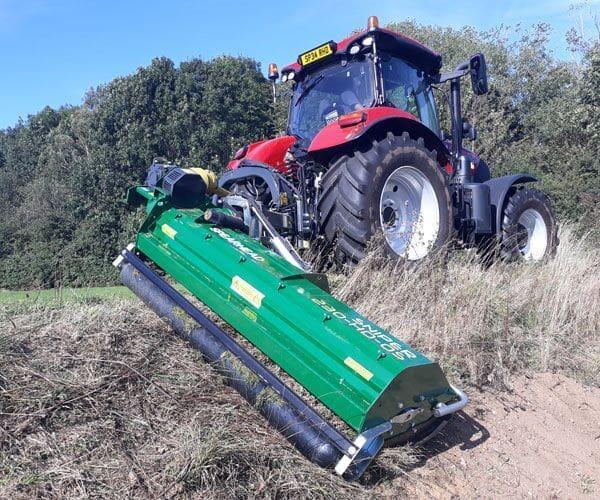
Suppose a used hydraulic offset flail mower appears to suit your tractor’s power. Still check its linkage, weight, PTO requirements, drive shaft, and hydraulic service. Winton’s offset mower specifications illustrate why: the manufacturer lists power and weight by model and specifies a hydraulic service for the offset function. These are separate checks.
If your tractor lacks the required service, establish whether a suitable solution exists and what it costs before buying. Ask the seller to identify the exact mower version, show the connections, and confirm the supplied equipment. Compare the mower’s working position with the headlands and areas you intend to cut. Its working width should fit your task, while its transport dimensions must fit the route between fields. Arrange a demonstration by a competent operator and a condition inspection; compatibility cannot tell you whether the rotor, bearings and guarding are sound.
Frequently asked questions
Is matching the recommended horsepower enough
No. Clarify whether the quoted requirement refers to engine or PTO power, then check mounting, weight, hydraulics and controls separately. Use specifications for the exact tractor and implement, including options that change their capabilities or requirements.
Does use on a similar tractor prove compatibility
It provides a useful lead, but ask for the other tractor’s exact model and fitted equipment. Hydraulic packages, linkage arrangements and PTO options can differ. Compare documented specifications and have any adaptations assessed for your own combination.
What should I request before travelling
Ask for plate photographs, the relevant manual pages, weight and transport dimensions, connection details and a complete included equipment list. Send your tractor’s specification in return. Settle missing controls, brackets, or shaft questions before committing to a viewing.
Compare up to five implement listings in the same category, then contact sellers about the details that remain uncertain. Budget for repairs, missing equipment, and transport alongside the purchase price. If you have an implement to sell, create a farm machinery listing.