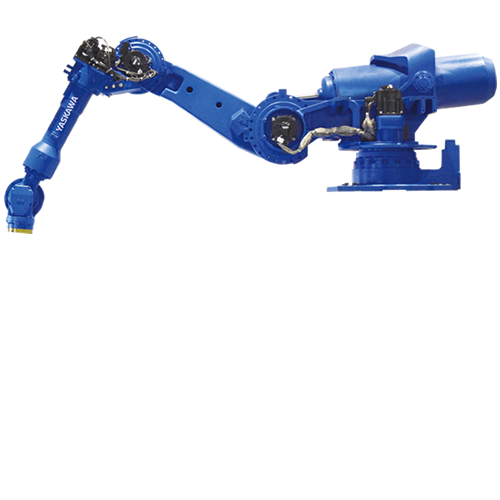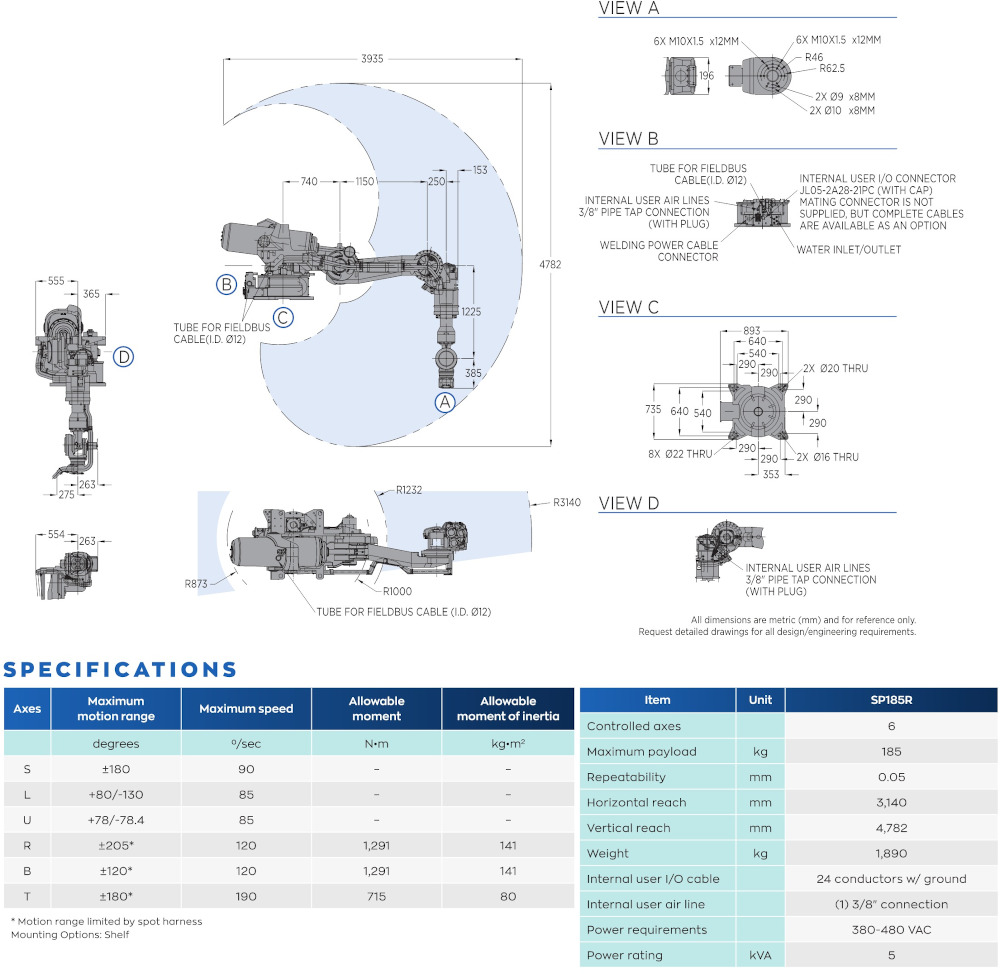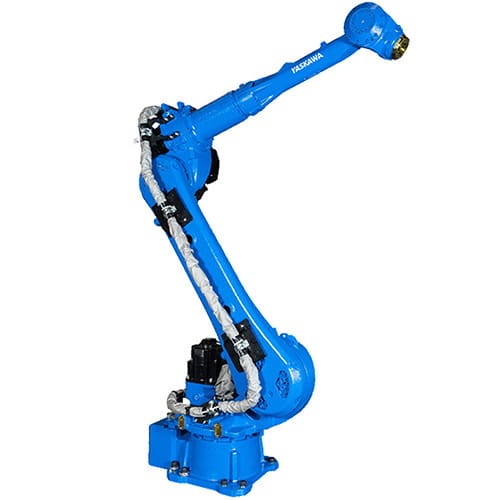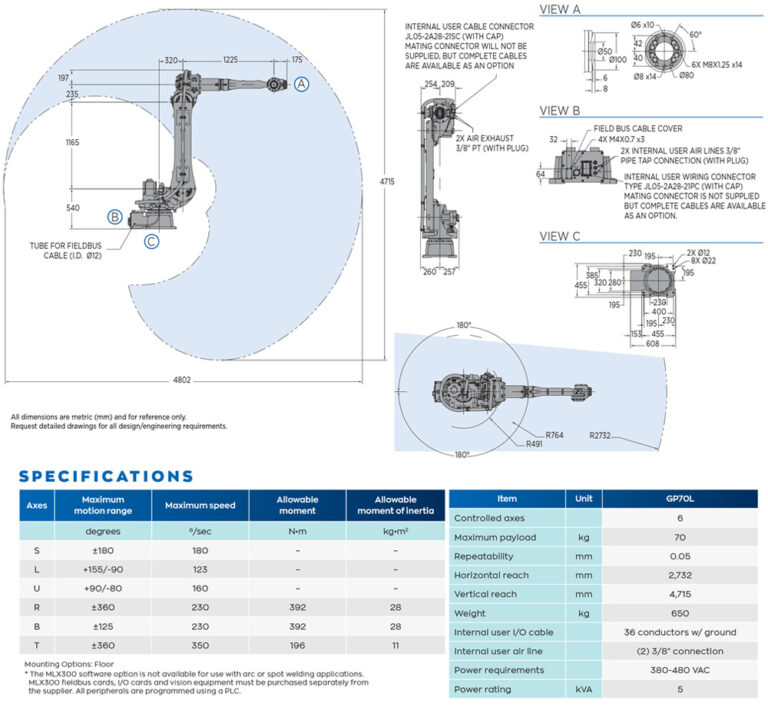
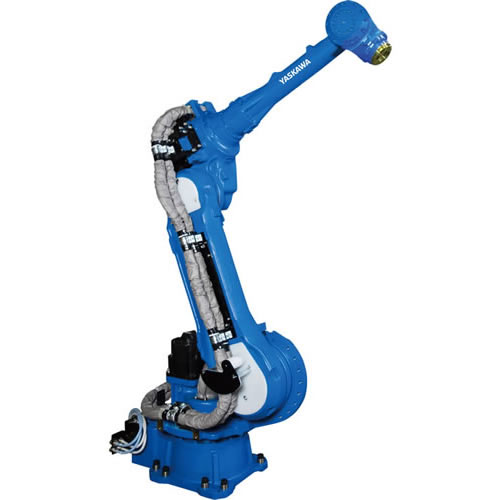

Engineered for superior spot welding performance, the six-axis SP80 robot offers exceptionally ...

Find new and used commercial smart technology and industrial used robots for sale with The Commercial Trader. Whether you’re automating a single workstation, upgrading an assembly line, adding pick-and-place capacity, or specifying a complete production cell, we connect you directly with trusted UK and European sellers, including OEMs, system integrators, dealers and end-users.
Browse new and used commercial robotics across every major kinematic configuration.
Every listing includes seller contact details so you can discuss specifications, controller version, accessories and delivery directly. For specification advice or sourcing support, get in touch via our contact page.
Smart Technology & Manufacturing
Get in touch with the team to advertise your business today. Contact us now.

Get in touch with the team to advertise your business today. Contact us now.
In our smart technology category, you’ll find a diverse selection of products designed to bring your operations into the digital age. From AI-driven quality inspection systems to IoT-enabled devices that monitor and optimize production processes, our listings include offerings from top-tier brands like Siemens, ABB, and Rockwell Automation. These technologies are crucial for businesses aiming to stay competitive by leveraging data-driven insights and real-time analytics to streamline operations and reduce downtime. Each product listing on The Commercial Trader is detailed with specifications and direct contact information, ensuring that you can easily reach out to suppliers to discuss your specific needs and obtain the best possible solutions.
When it comes to manufacturing robotics, The Commercial Trader showcases a comprehensive array of robotic systems engineered to handle a wide range of tasks, from assembly and welding to material handling and packaging. Our platform features robots from renowned manufacturers like FANUC, KUKA, and Yaskawa, known for their durability, precision, and adaptability in various industrial environments. Whether you’re interested in articulated robots for complex multi-axis operations, SCARA robots for high-speed assembly, or cartesian robots for precision pick-and-place tasks, our listings provide a wealth of options to meet the specific challenges of your production line. Each listing includes in-depth descriptions and direct seller contact details, making it easier for you to explore the best options and integrate them seamlessly into your workflow.
Beyond individual robotics, The Commercial Trader also offers a selection of integrated automation systems that combine smart technology with advanced robotics to create fully automated production lines. These systems, sourced from industry leaders like Mitsubishi Electric and Bosch Rexroth, are designed to work in harmony with your existing infrastructure, enhancing overall efficiency and throughput. Whether you’re looking to automate repetitive tasks, reduce labor costs, or improve product consistency, our platform connects you with the technology and expertise needed to achieve your goals.
Commercial smart technology covers the industrial robotics, automation, vision systems and connected manufacturing equipment that underpin modern Industry 4.0 production. Industrial robots fall into several distinct kinematic configurations, each suited to different tasks: articulated (6-axis arm), SCARA (selective compliance assembly arm), Cartesian (linear-axis gantry), Delta (parallel kinematic for pick-and-place), polar (spherical-coordinate) and cylindrical (cylindrical-coordinate). UK installations typically integrate robots with vision systems, force-torque sensors, end-of-arm tooling, safety systems (light curtains, safety scanners, emergency stops) and PLC or robot controller integration to deliver complete automation cells.
The industrial robotics market is dominated by major OEMs and a fragmented secondary market of integrators and resellers. The Commercial Trader brings used and refurbished robots from multiple sellers into a single platform with direct contact and clear filters.
Industrial robots are well-suited to second-hand purchase because the mechanical designs are mature, controllers can be refurbished, and the duty cycle of most installations leaves significant remaining life.
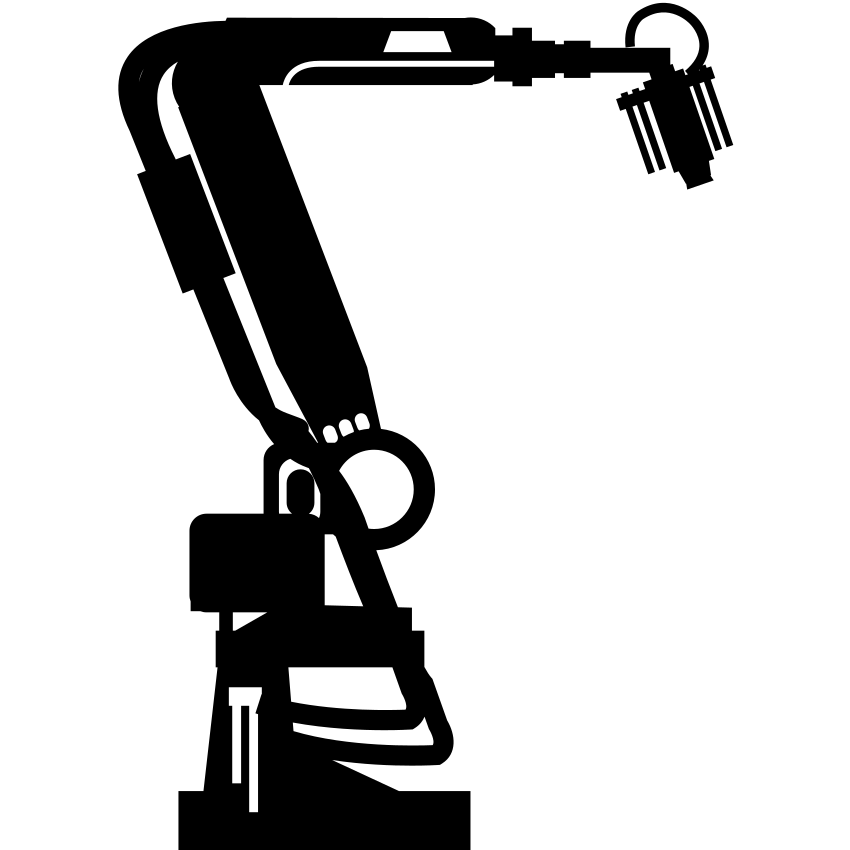
Articulated robots (typically 6-axis arms, sometimes 7-axis) are the most versatile robot type, used for welding, painting, material handling, machine tending, palletising and assembly. Reach ranges from sub-1m up to 3.5m+, with payload capacities from a few kilograms up to 2,000kg+ for heavy-duty handling.
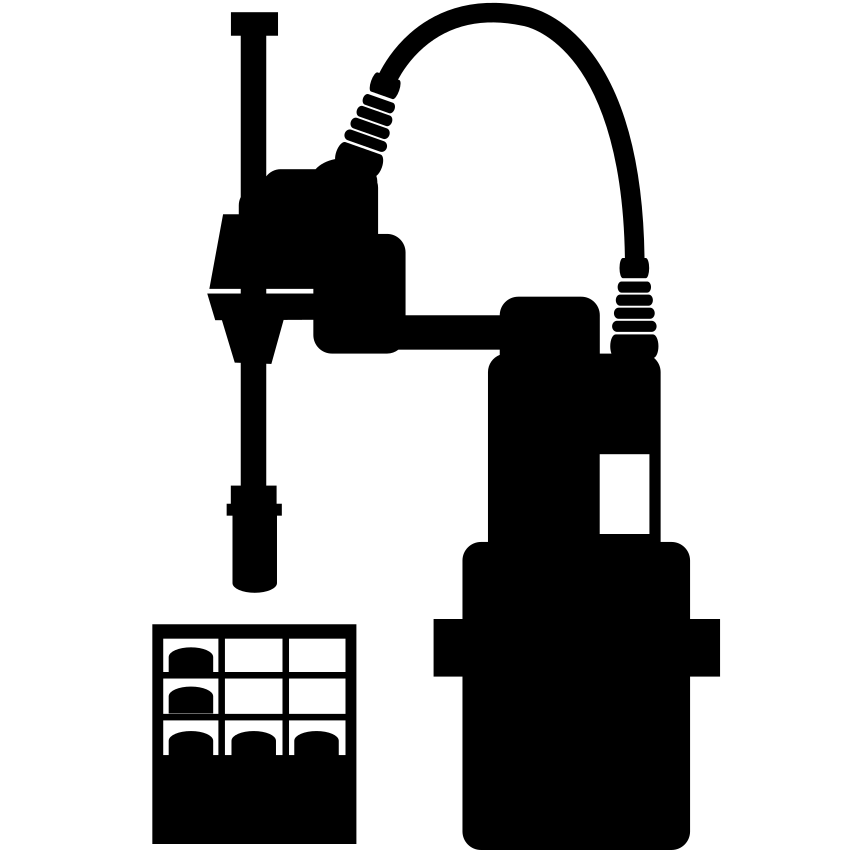
SCARA robots (Selective Compliance Assembly Robot Arm) excel at high-speed assembly, pick-and-place and packaging work. Their rigid vertical axis and compliant horizontal motion make them ideal for inserting components, screwing and short-cycle pick-and-place. Common in electronics, pharmaceutical and food assembly.
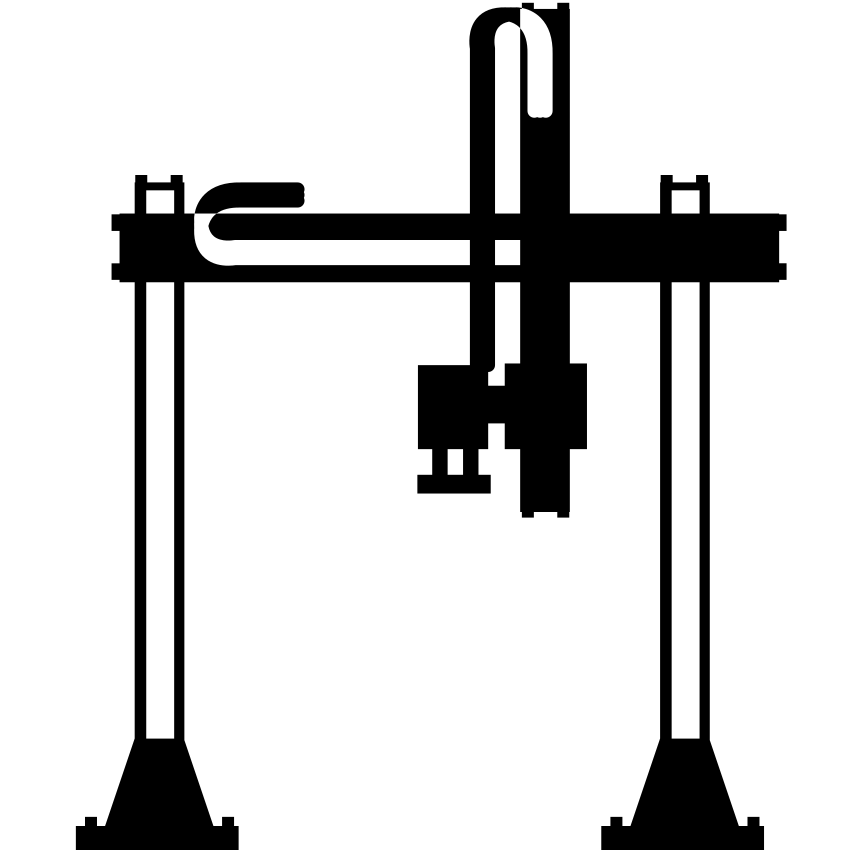
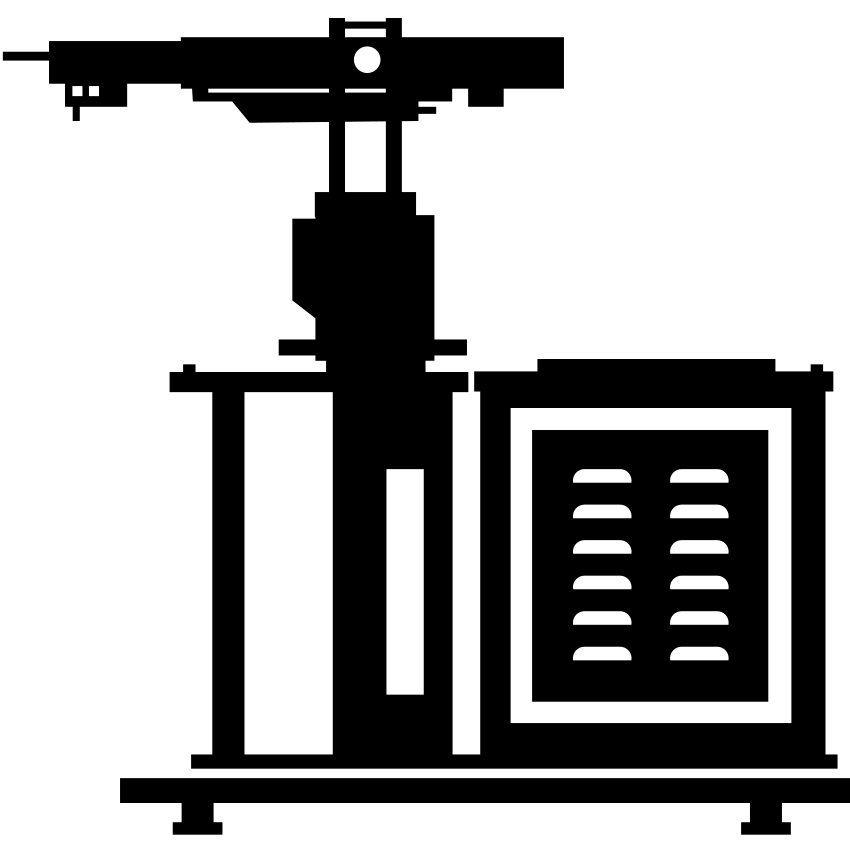
Cartesian robots (also called linear or gantry robots) move along three orthogonal linear axes. They suit large work envelopes, palletising, CNC machine tending, 3D printing and dispensing applications. Easy to specify, modular and economical for many handling tasks.
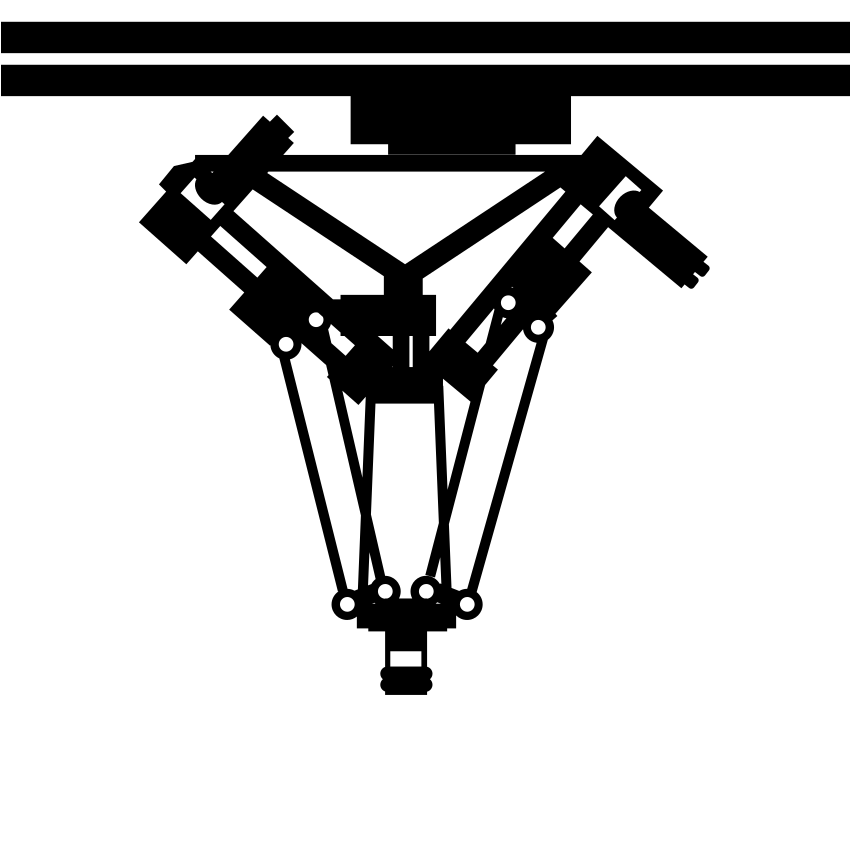
Delta robots use parallel-kinematic links to deliver extremely fast pick-and-place motion, with cycle times under 0.3 seconds for some applications. Standard for high-speed packaging, food handling, pharmaceutical sorting and electronics assembly where speed matters more than payload.
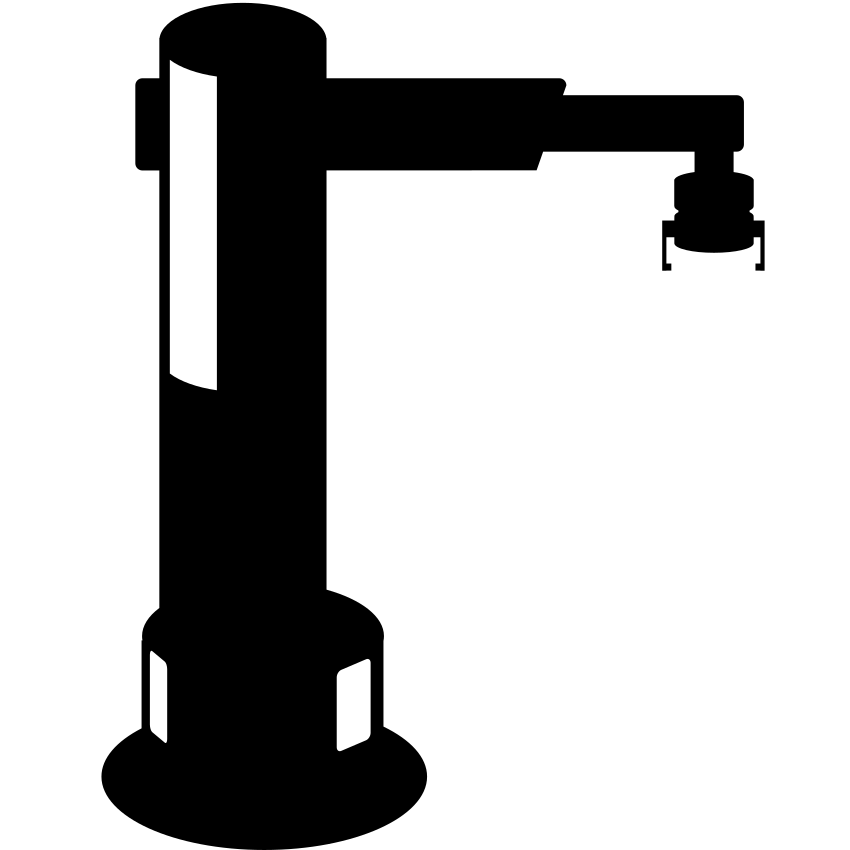
Polar robots (spherical-coordinate robots) operate in a polar coordinate system with two rotary axes and one linear axis. While less common than other configurations today, they remain in service for specific applications such as spot welding and certain machine tending duties.
Cylindrical robots operate in a cylindrical coordinate system, with a vertical column, rotational base and horizontal arm. They suit assembly, machine tending and material handling within a defined cylindrical work envelope, particularly where vertical access is important.
The Commercial Trader features industrial robotics listings from sellers across the UK and Europe. Use our location and distance filters to find robots close to your facility, supporting site visits and reducing logistics costs on heavier installations.
Industrial robots are designed for very long working lives. Mechanical components routinely operate for 80,000-100,000+ hours, with reducer rebuild and harness replacement extending life further. Controllers may become obsolete sooner than the mechanics, with some controller generations supported for 15-20 years before parts become limited. A well-maintained used robot can typically deliver another 10-20 years of service in lower-duty applications, even after a high-duty first life.
As we operate as a marketplace, any returns policy must be agreed directly with the seller before purchase. We strongly recommend a pre-purchase inspection covering robot condition, axis backlash, brake function, cable health, controller serviceability and accessory completeness. Many sellers will arrange a power-on demonstration as part of the sale process.
We list every major smart technology and industrial robotics sub-category, including:
The Commercial Trader covers far more than just one category. Explore the full marketplace, with thousands of listings across vehicles, machinery, equipment and furniture:
Interested in this business? Get in touch with them today to discuss your needs
Please fill out the information below and our team will be in touch with a quote for you.
To get started, select the most relevant category for your listing below.
At The Commercial Trader, we connect buyers and sellers to create a seamless, user friendly experience. And this doesn’t just stop at products for sale! Discover our selection of professional businesses to find your next commercial partner.
View this listing on a map, and enter your location for easy directions
Sorry, no records were found. Please adjust your search criteria and try again.
Sorry, unable to load the Maps API.
Interested in this item? Get in touch with the seller today
This form is submitted directly to the seller. Contact information for the seller is revealed immediately after submission, should you need to follow up or contact the seller quickly.
Thanks, your submission was successful!
Listing Address
Thanks for choosing to advertise on The Commercial Trader – please fill in your information below and one of our team will be in contact within the next 48 hours to arrange uploading your products for you.