
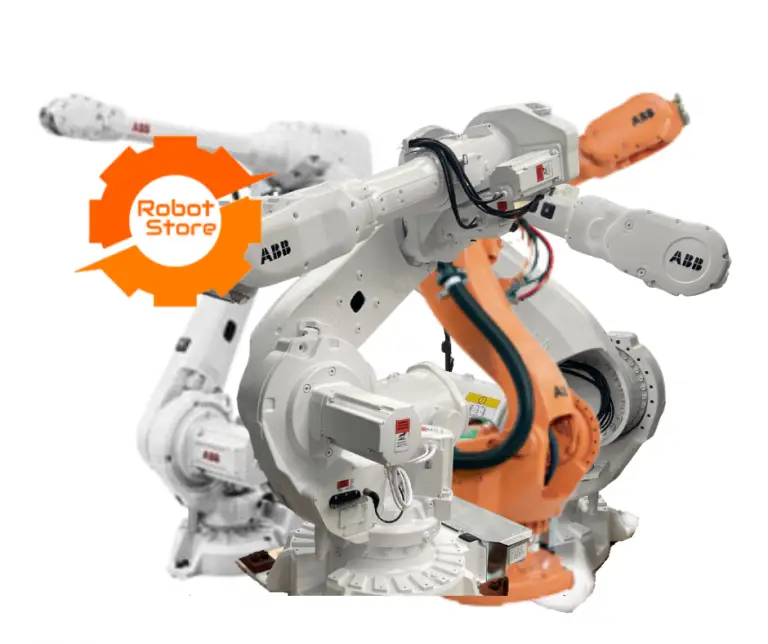
Image source: The Commercial Trader
Before buying a used industrial robot, confirm its suitability for your task and exactly what comes with it. The arm, controller, software, cables, and tooling must work together. Maintenance evidence and a realistic integration quotation help you judge whether the advertised price represents a useful investment for your production line.
A robot that performed well in another factory can be worth considering for your business. The opportunity becomes clearer when you compare complete, usable packages and understand the work needed to adapt each one. Start with the job you want done, then build your shortlist around it.
Define the job beyond payload and reach
Write down the parts to be handled, their dimensions, the required movement, and the available floor space. Confirm the suitable robot configuration and number of axes. Include cycle time, mounting position, and the working environment. A welding application, for example, needs a different assessment from moving cartons between conveyors.
The weight of the product is only part of the loading assessment. Grippers and other tooling add weight, and their centre of gravity matters. ABB’s RobotLoad documentation considers the combined handling load, centre of gravity and inertia. Give your proposed tooling and layout to a competent integrator so they can assess the specific robot against its manufacturer’s limits.
Get a written inventory of the package
Photographs can show equipment that is being retained by the seller. Request an itemised list tied to the robot’s model and serial number, covering:
- The matching controller, teach pendant and connecting cables.
- Installed software options, licences and any conditions on transferring them.
- Grippers, welding equipment, sensors, dress packs and mounting hardware.
- Any guarding, safety controls or peripheral equipment included in the sale.
Have the integrator review controller generation, communications and software compatibility with your existing equipment. Establish whether programme backups, configuration files and manuals are supplied. Missing items can be sourced in some cases, but obtain availability and prices before treating an incomplete package as a bargain.
Look for evidence behind the condition description
Operating hours are useful context, alongside the robot’s previous application, maintenance records and repair history. Request a demonstration, preferably showing movements relevant to your intended work. A specialist inspection can investigate concerns such as abnormal movement, noise, faults and visible cable damage.
If the advert says refurbished, find out what that means for this unit. Which components were inspected or replaced, who did the work, and what testing followed? ABB’s own remanufacturing programme describes a defined inspection and functional-testing process. Other sellers may offer a different scope. Get the actual test report and any warranty terms in writing.
Budget for the finished working cell
Include transport, installation, tooling changes, programming, safety assessment, commissioning and operator training in your comparison. Confirm who will support the controller and supply parts after installation. A slightly higher purchase price may be easier to justify when it comes with the equipment and documentation your project needs.
Existing guarding or a previous factory installation does not establish that the new arrangement is suitable. Have the complete application assessed. HSE’s guidance on second-hand equipment explains that suppliers have safety responsibilities and should provide adequate information for use. Your purchasing specification should make the required documentation and responsibilities clear.
Frequently asked questions
Does a used robot normally include its controller?
It depends on the advert. Confirm the exact controller, pendant, cables, and software supplied. Do not assume that equipment visible in a photograph forms part of the sale.
Can an older robot work with a new production line
Potentially, but an integrator should check its movement, controls, communications and safety requirements against the proposed line. Parts and technical support also deserve attention before you commit.
Is a refurbished robot ready to start production?
Refurbishment describes work on the equipment; it does not establish suitability for your application. Tooling, programming, installation and commissioning may still be required. Agree the supplied scope explicitly.
Find a package that fits your project
Explore industrial robots and automation equipment on The Commercial Trader to build a shortlist around your application. Contact sellers with the same equipment list and integration questions, then compare their answers alongside the asking prices. That gives you a firmer basis for arranging a viewing and moving your project forward.