
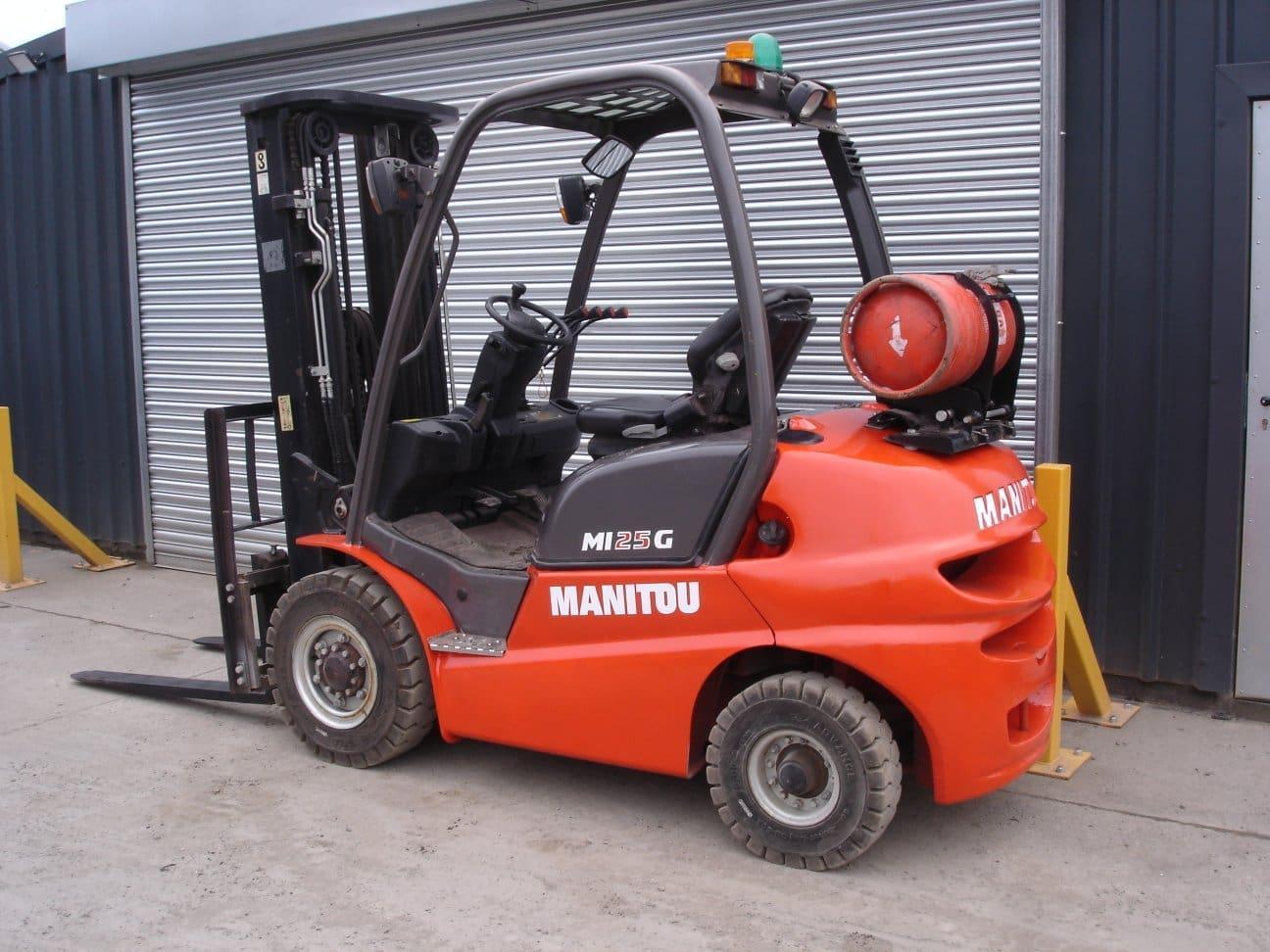
Image source: The Commercial Trader
To find out whether a used forklift will fit your warehouse, measure its complete working route and compare those measurements with the exact truck, mast and load configuration. Doorways, turning space, stacking height and lifting capacity all matter. A machine that enters the building can still struggle to do the work inside it.
Measure the whole handling route
Walk the route from unloading to storage, including the return journey with empty pallets. Record the narrowest openings, corners, rack aisles and loading areas. Measure between the obstructions that are actually there: columns, rack protection, door frames and temporarily stored goods can reduce the space shown on a floor plan.
Photograph awkward turns and mark them on a simple sketch. Give the supplier your pallet dimensions and handling direction so they can confirm the truck's required stacking aisle width. Truck width alone cannot answer that question. HSE's lift truck guidance also calls for sufficient clearance for loaded and unloaded movements, with pedestrian safety considered in the layout.
Allow for the mast and the load
Record doorway clearance and the height available below beams, sprinklers and other overhead fittings. Compare these with the truck's overall height, lowered mast height and raised configuration. Request the specification for the mast fitted to that particular truck; a familiar model name does not identify every possible mast option.
Free lift matters when handling goods under a low ceiling or inside a container. Toyota's explanation of forklift free lift describes how far the forks can rise without increasing the mast height. Obtain the actual free lift measurement and account for the load and backrest too. Give the supplier your highest storage position so they can establish the clearance needed to place and remove a pallet.
Match capacity to your real pallets
Build a short load profile covering your heaviest regular pallet, its dimensions and where it must be stored. Include unusual items that cannot be handled another way. A warehouse handling compact cartons has different requirements from one moving long packs of timber, even when the loads weigh the same.
Obtain a readable capacity plate and have the supplier confirm the available capacity at your required height and load centre. Include any attachment in that assessment. When an advert gives only a headline lifting figure, treat the missing details as questions to resolve before travelling. Record which combinations of load and storage position each candidate can handle.
If you expect larger pallets or a revised racking layout, separate those future requirements from today's measurements. Decide which must be accommodated now and which can wait. That keeps a sensible allowance for growth from turning into an unnecessarily large truck.
Build a shortlist around daily work
Physical fit also includes parking and charging. For an electric truck, identify a suitable charging location, available supply and the time between shifts. Confirm that the battery and charger are included and compatible, then have the proposed arrangement assessed by an appropriate specialist. Explain any outdoor travel, ramps or changes in floor surface when discussing the truck's suitability.
Send the same measurements to each seller and request written answers against them. This makes a cheaper but unsuitable truck easier to rule out. Once the layout works, use our guide to buying a used forklift for the separate checks on condition, maintenance and examination records. Agree delivery and a suitable demonstration before committing.
Frequently asked questions
Is forklift width enough to judge aisle fit
No. The truck needs room to turn and position its load. Give the supplier the actual aisle width, pallet dimensions and approach direction, then obtain confirmation for the exact truck configuration.
Does a taller mast always solve high racking
It must also pass through your doors and provide the required capacity at height. Compare lowered height, extended clearance and the capacity plate together before choosing a different mast.
What should I send a seller first
Send a dimensioned route sketch, photographs of tight spaces, pallet weights and sizes, the highest storage position and your shift pattern. These give the seller a practical basis for discussing suitability.
Explore used forklifts and compare up to five listings in the category. Contact shortlisted sellers with your measurements so that viewings concentrate on trucks capable of fitting your warehouse and its workload. If you have a forklift to sell, create a plant machinery listing.